MANUAL 01Won't lock01
uPVC, composite, aluminium, timberThe handle won't go down, the sash has to be pushed, or it shuts at the bottom and gapes at the top: the right order to find out why, before you change the espag.Cam striking the keep
10 diagnosis-by-symptom manuals for anyone who repairs uPVC doors and windows: window won't lock, sash catching, draughts and leaks, condensation, stiff handle, friction stays, gaskets, misted units, door won't lock, dropped door. For every symptom: cause → how you confirm it → fix, in the order that finds the fault before you change parts. Plus 5 tools to measure, adjust, quote and hand over.
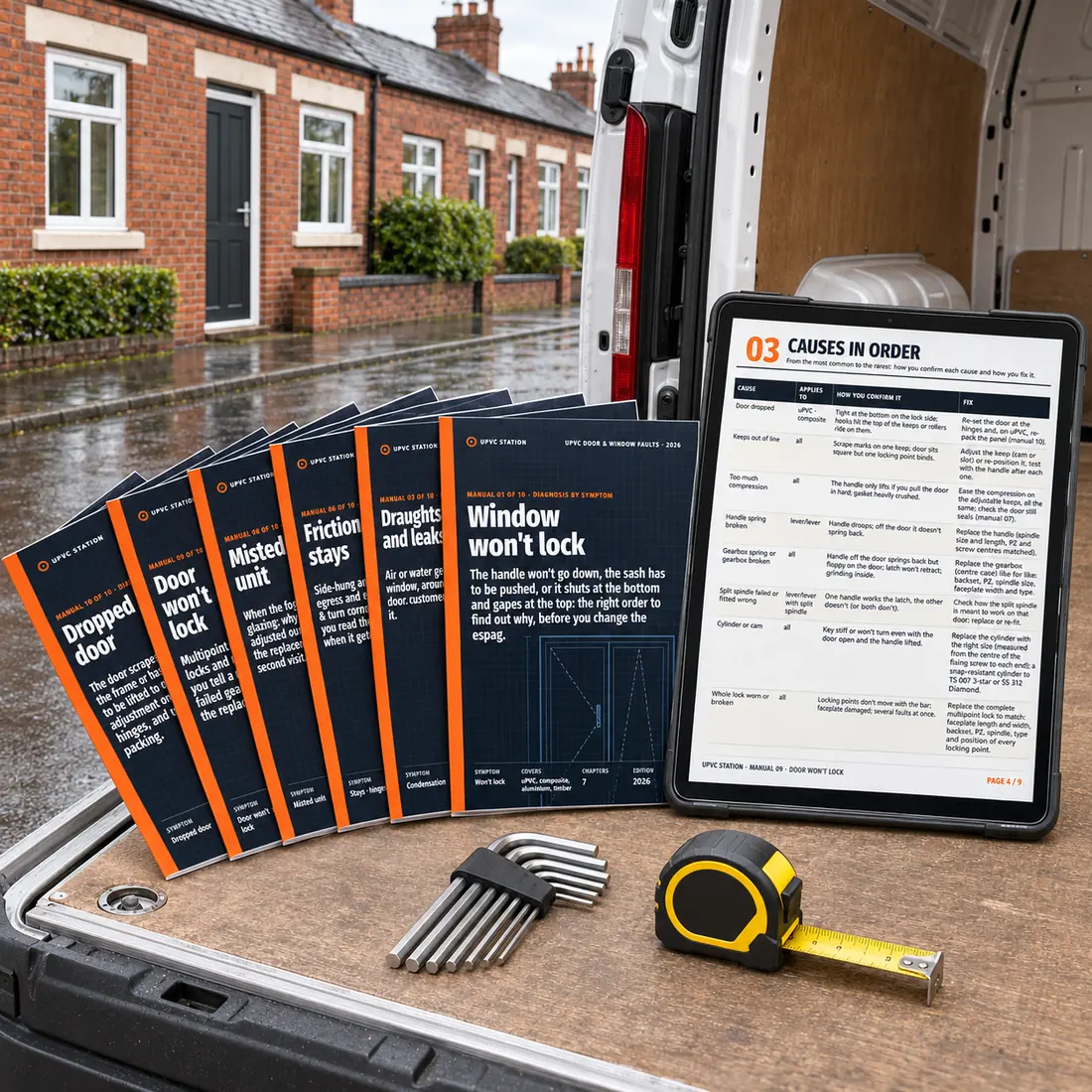
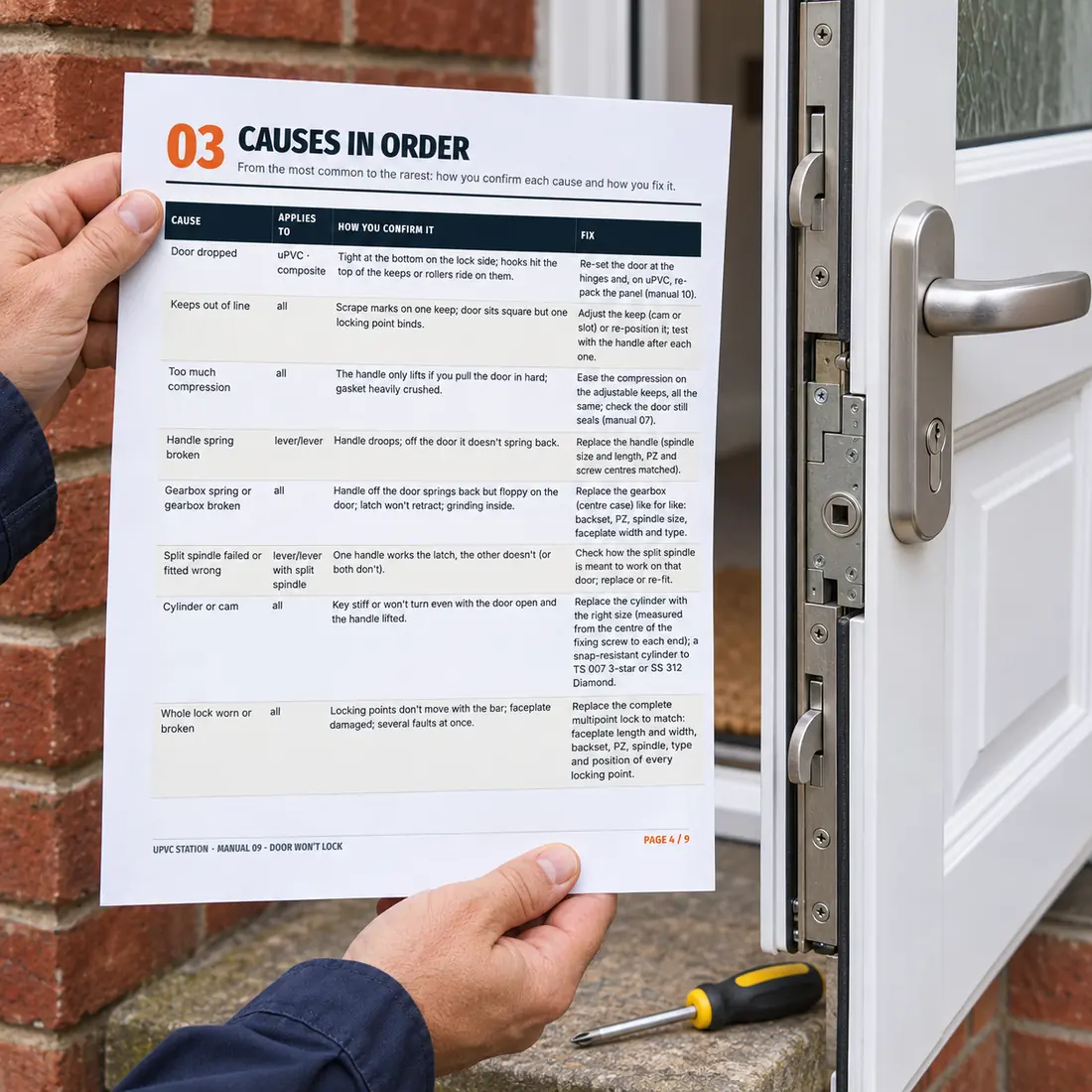
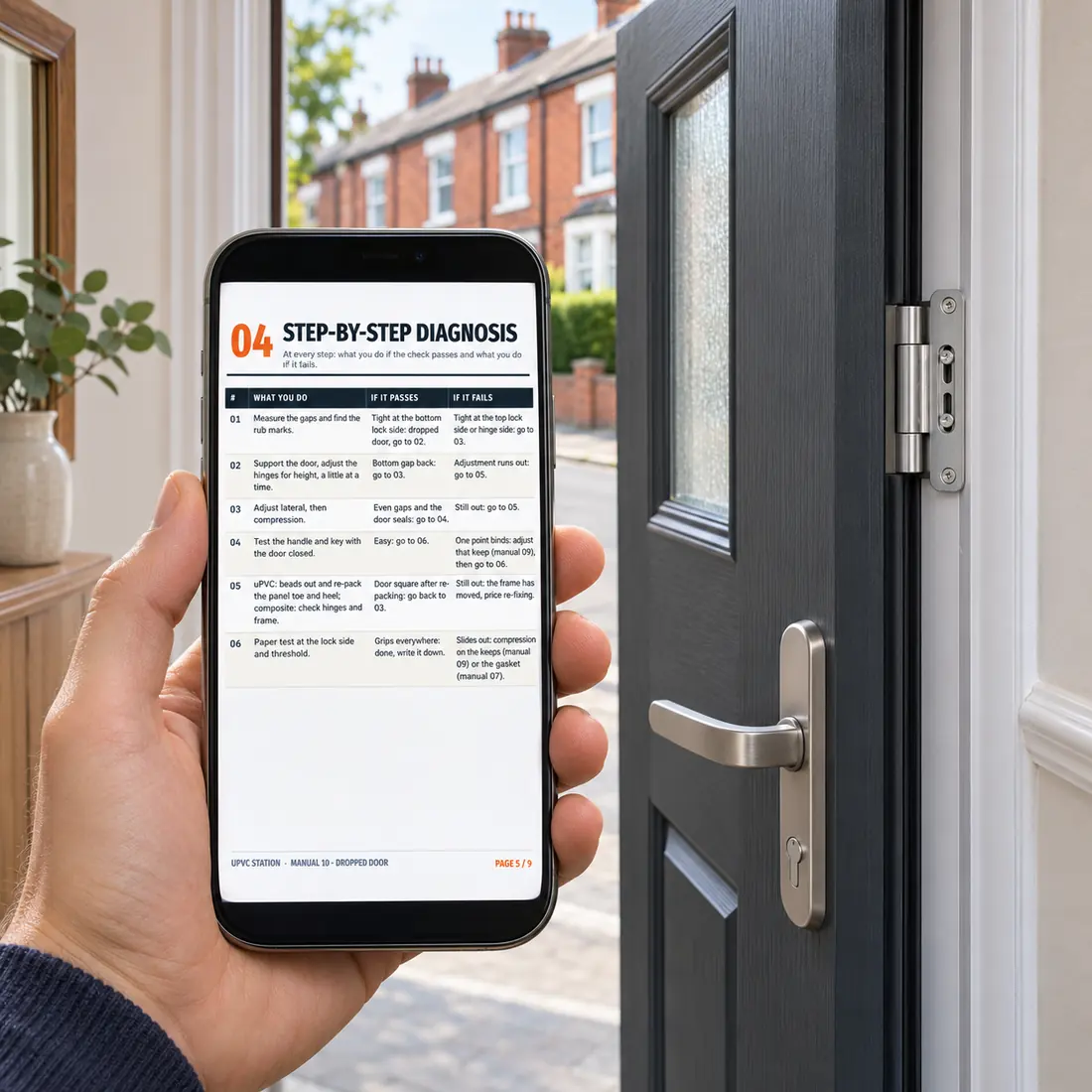
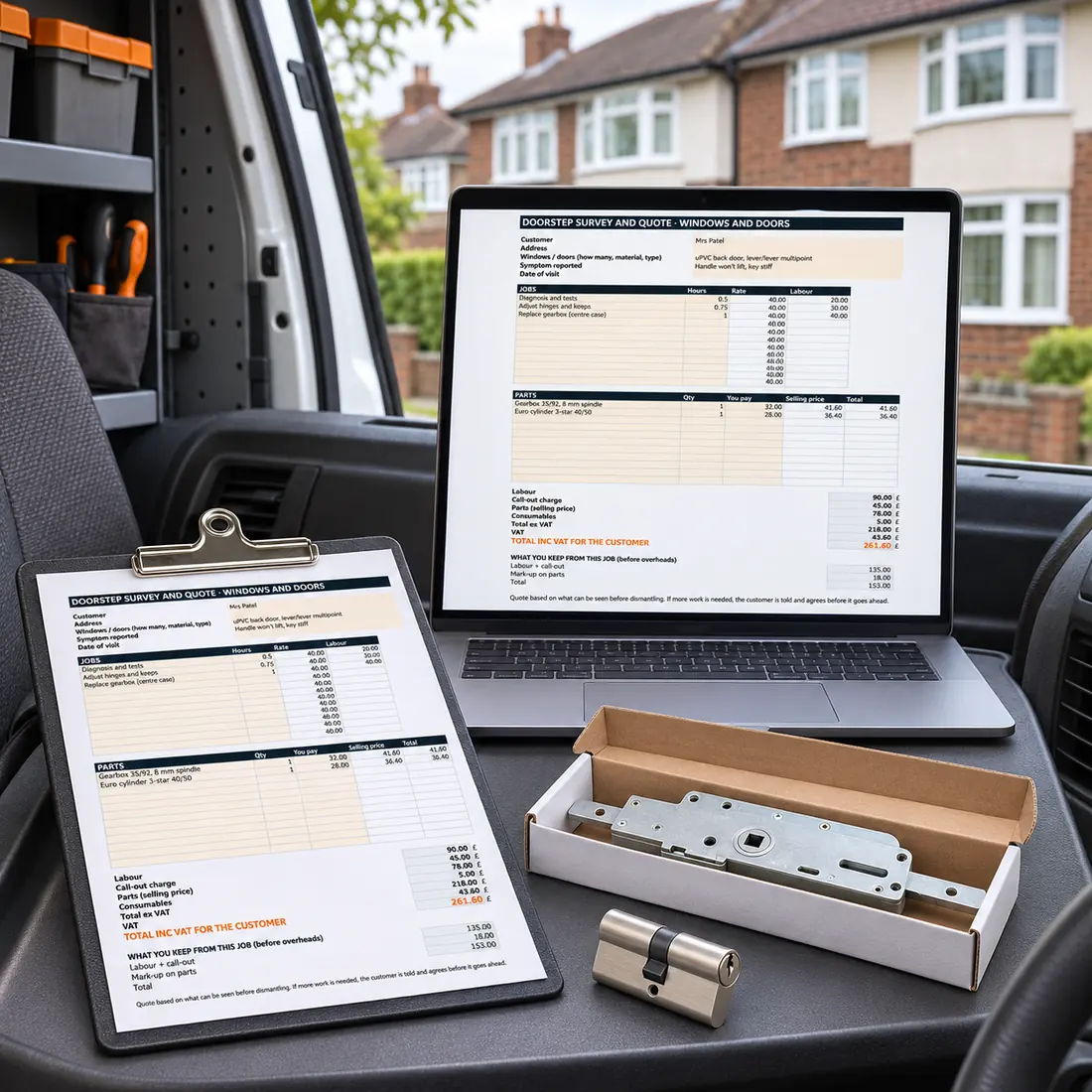
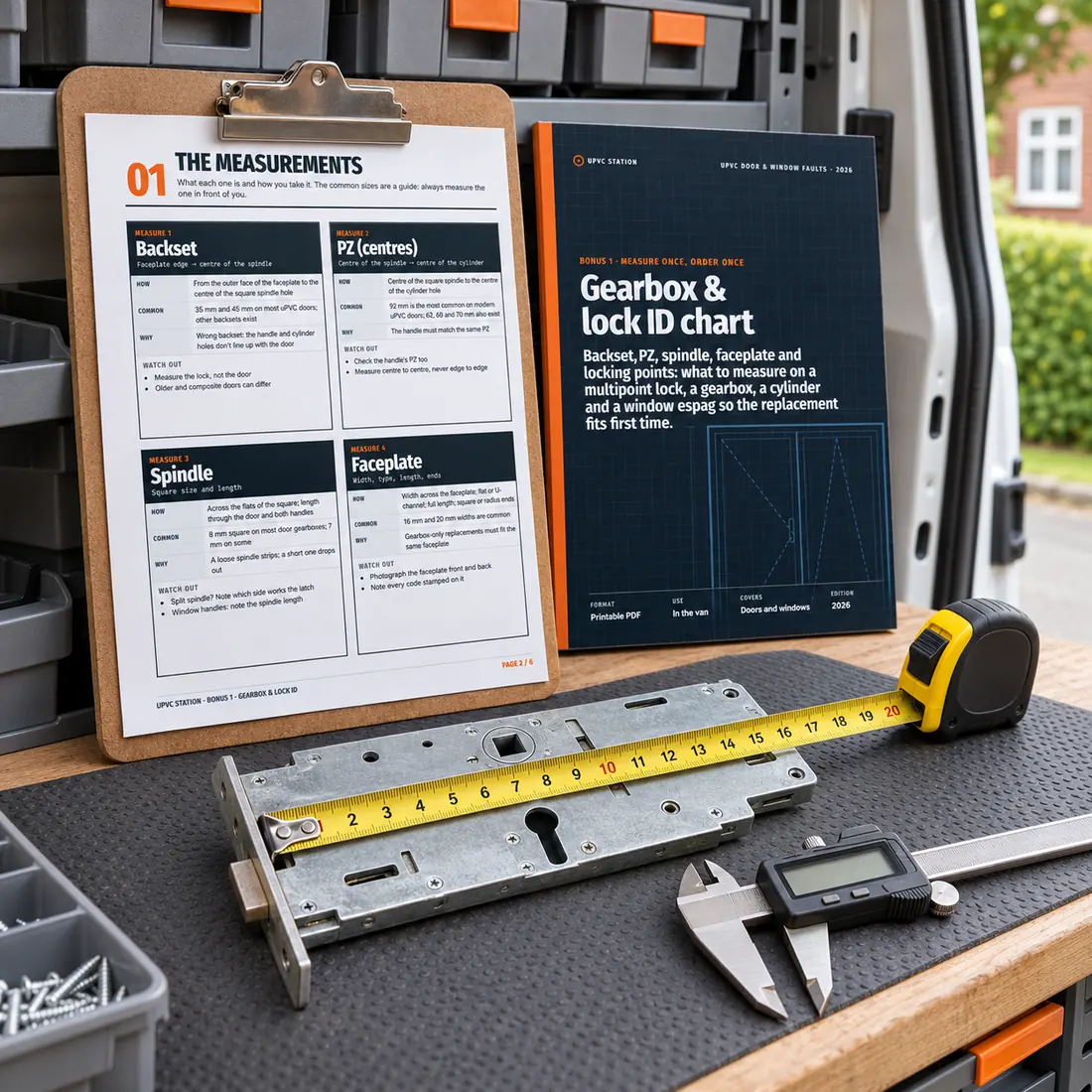
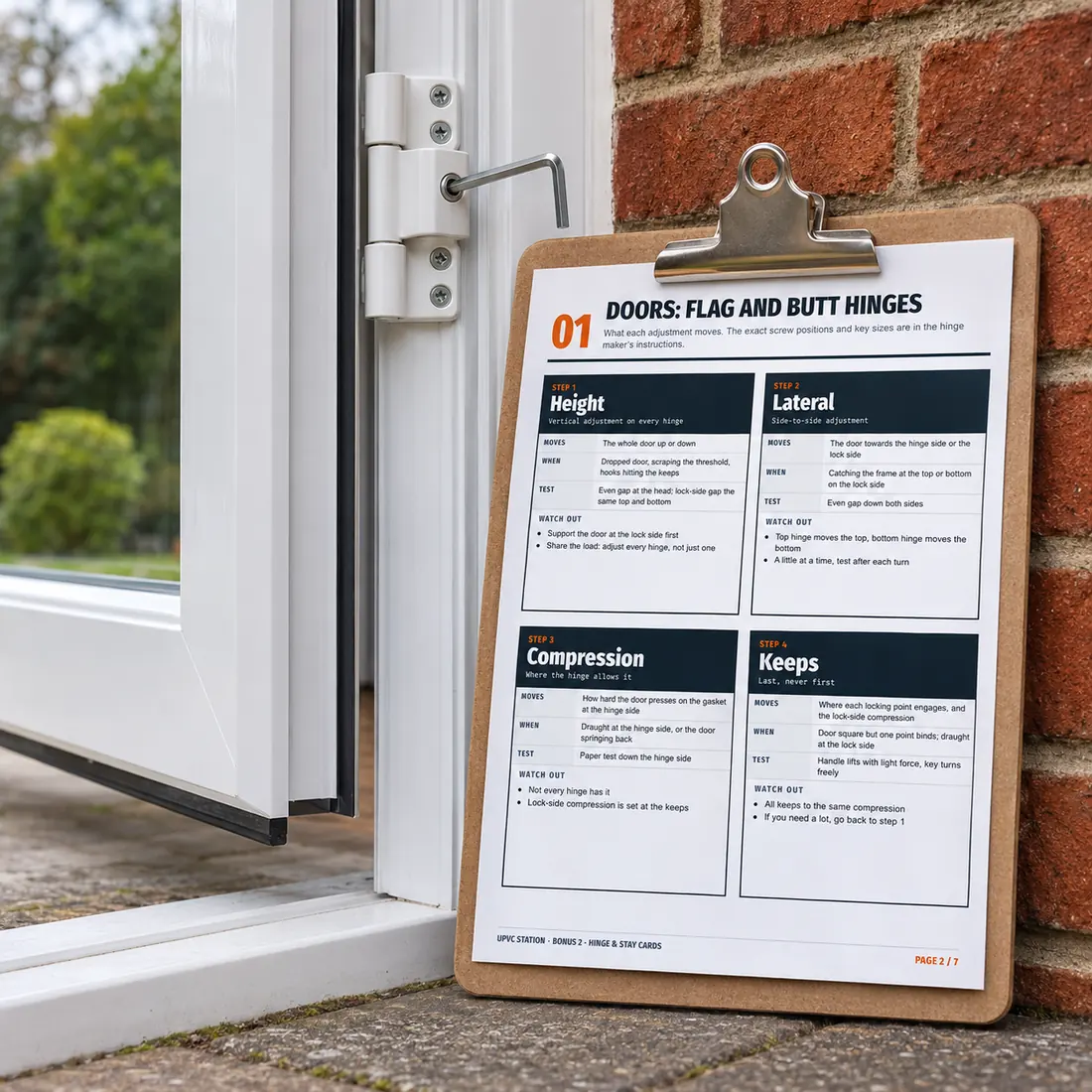
Digital product (PDF + Excel). Shown printed in the photos as an example. £23 in the UK, €27 in Ireland, all in.
Two repairers, the same door. The first orders a new multipoint gearbox and comes back a week later: the handle is still stiff, because the door has dropped and the hooks are still hitting the keeps. The second opens the door, lifts the handle and turns the key with it open, sees it's smooth, lifts the door a couple of millimetres on the hinges and is done in minutes. It isn't talent: it's the order of the checks, and that order is rarely written down, step by step and in the words of the trade, from the symptom to the fault.
You fit a new gearbox in a door that has dropped. You change a gasket when the cams just needed more compression. The customer pays for a visit that fixed nothing, and next time they ring someone else.
New windows, first cold morning: wet glass and mould in the corner of the reveal. The customer rings to say the windows are faulty. If you can't measure it and explain it, you go back three times for free.
Air is getting in, but where? Through the sash, round the frame or through the trickle vent: three different jobs. Silicone everywhere blocks the drainage and brings the water inside.
When the cold arrives everyone notices the draught, the condensation and the misted unit. The calls come all at once: with a method you know where to start, without one you lose the days.
A door or a window isn't a lucky dip. To lock and seal properly it needs the sash or door in the right place, the locking points lined up with their keeps, gaskets that press and a frame that's fixed. Most faults are found with a few checks in the right order, before you take anything apart. You just need to know where to start.
One manual for every complaint you hear on the phone. For uPVC, composite, aluminium and timber doors and windows, casements, tilt & turn and multipoint doors: the diagnosis follows the same logic, and where something changes with the material or the system, it says so.
Every manual follows a repair visit the way it really goes, so you always know which page to open.
What the customer says and what it usually means, before you change any part.
Ten minutes in front of the door or window: the checks that often show the fault already.
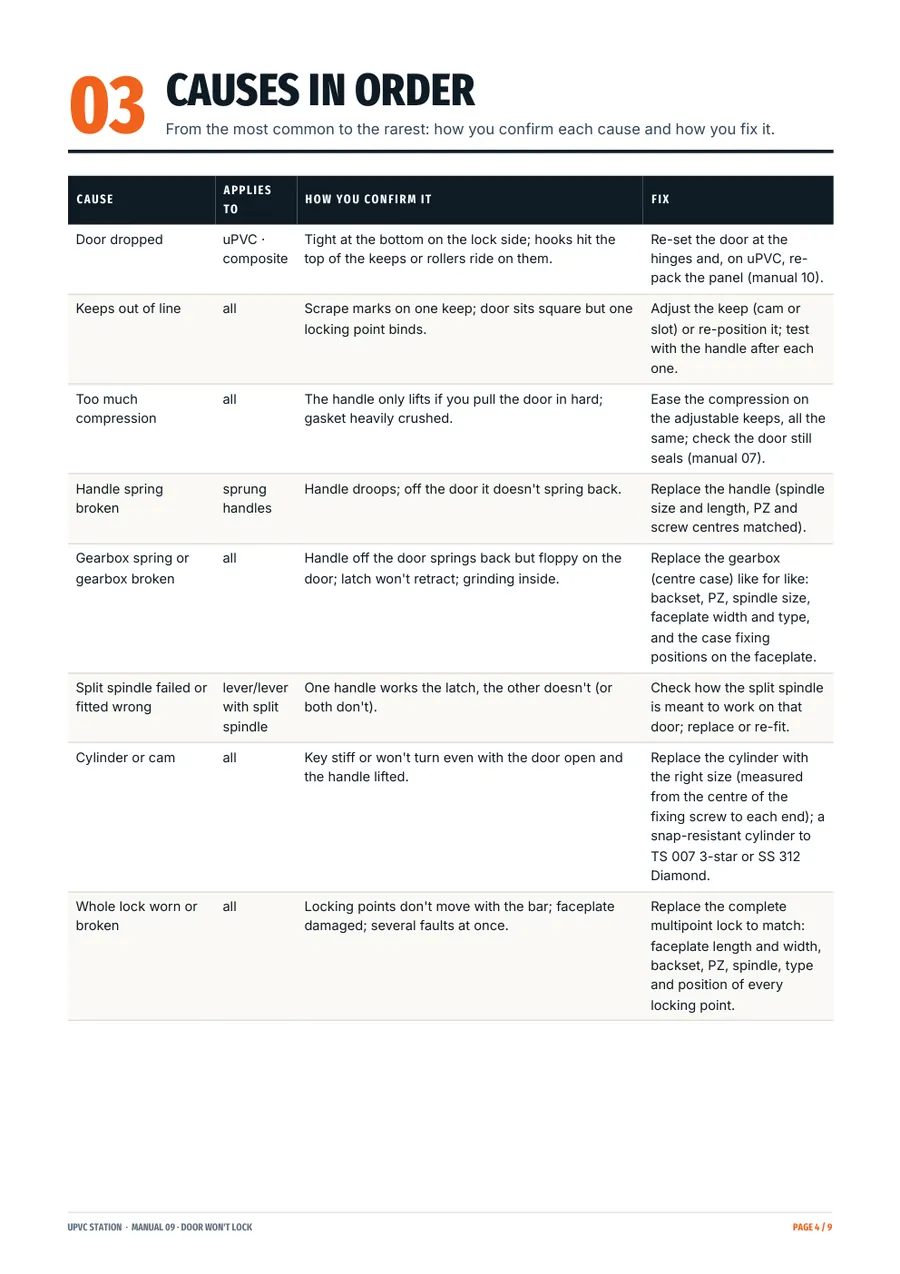
From the most common to the rarest: how you confirm and fix each cause.
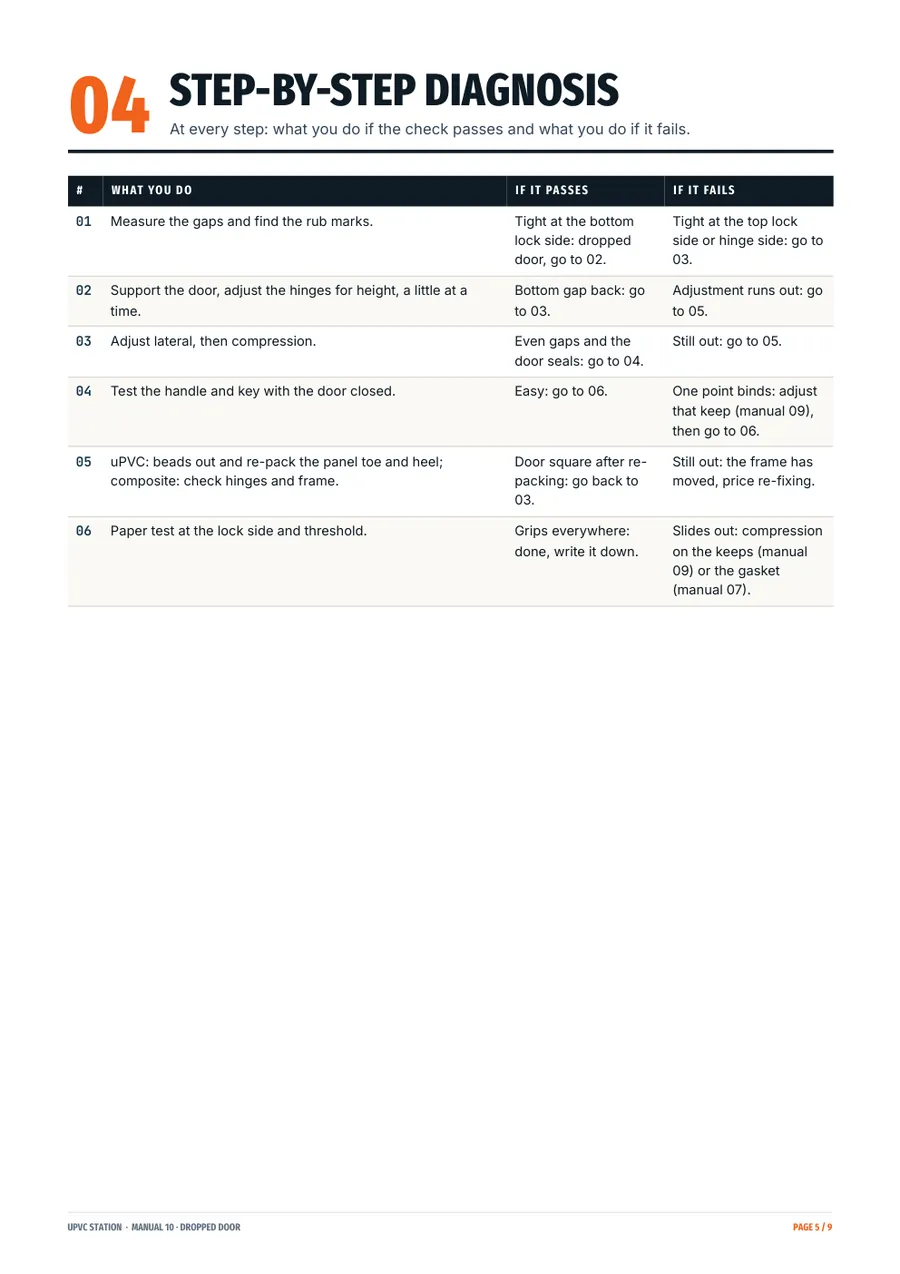
At every check, what you do if it passes and what you do if it fails.
uPVC, composite, aluminium or timber, casement, tilt & turn or multipoint door: what changes and where you look in the system's instructions.
What you say to the customer, the job sheet and the handover list.
Where every published figure comes from.
No stock images. These are real pages from the pack, written and laid out for the job, not scanned from a hardware catalogue.
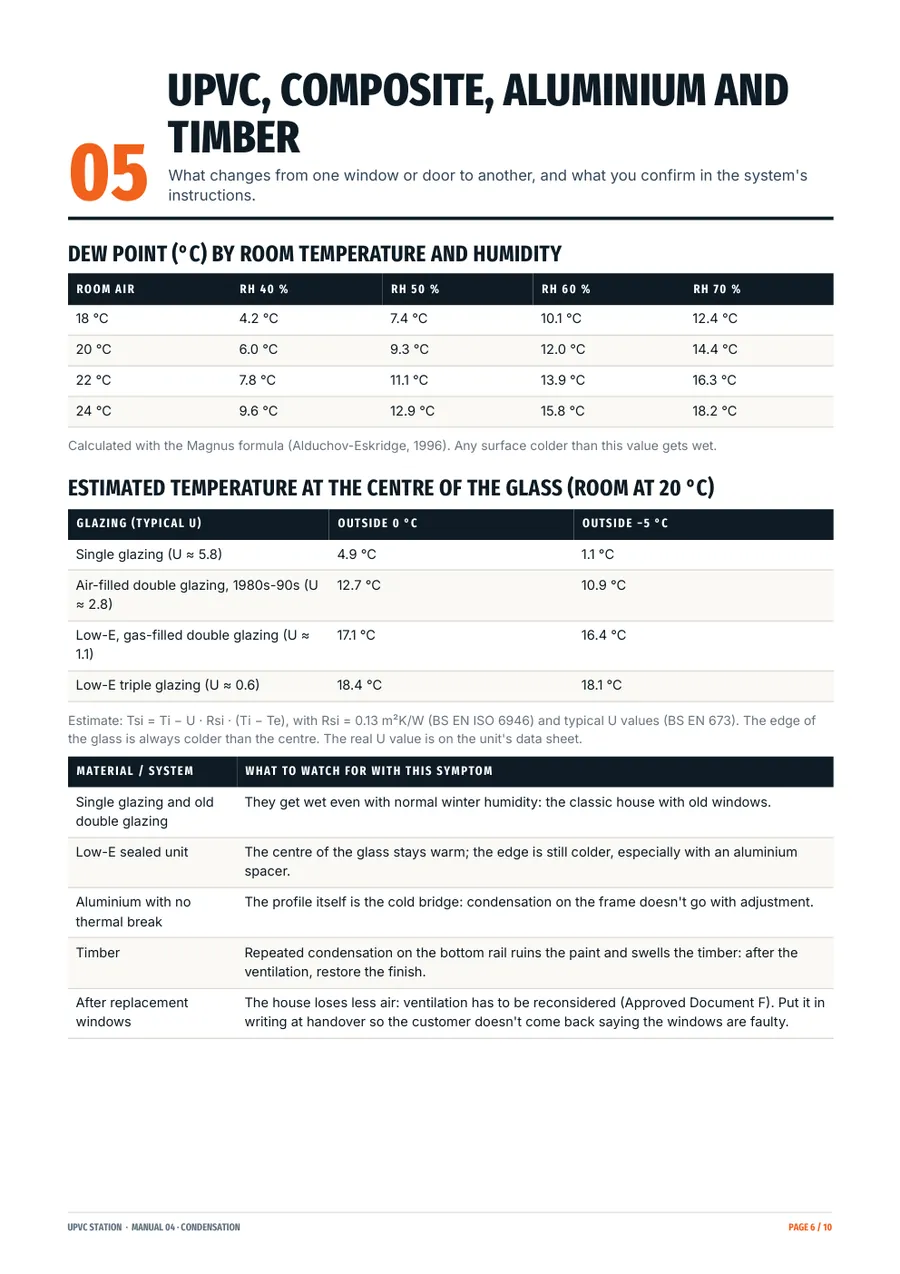
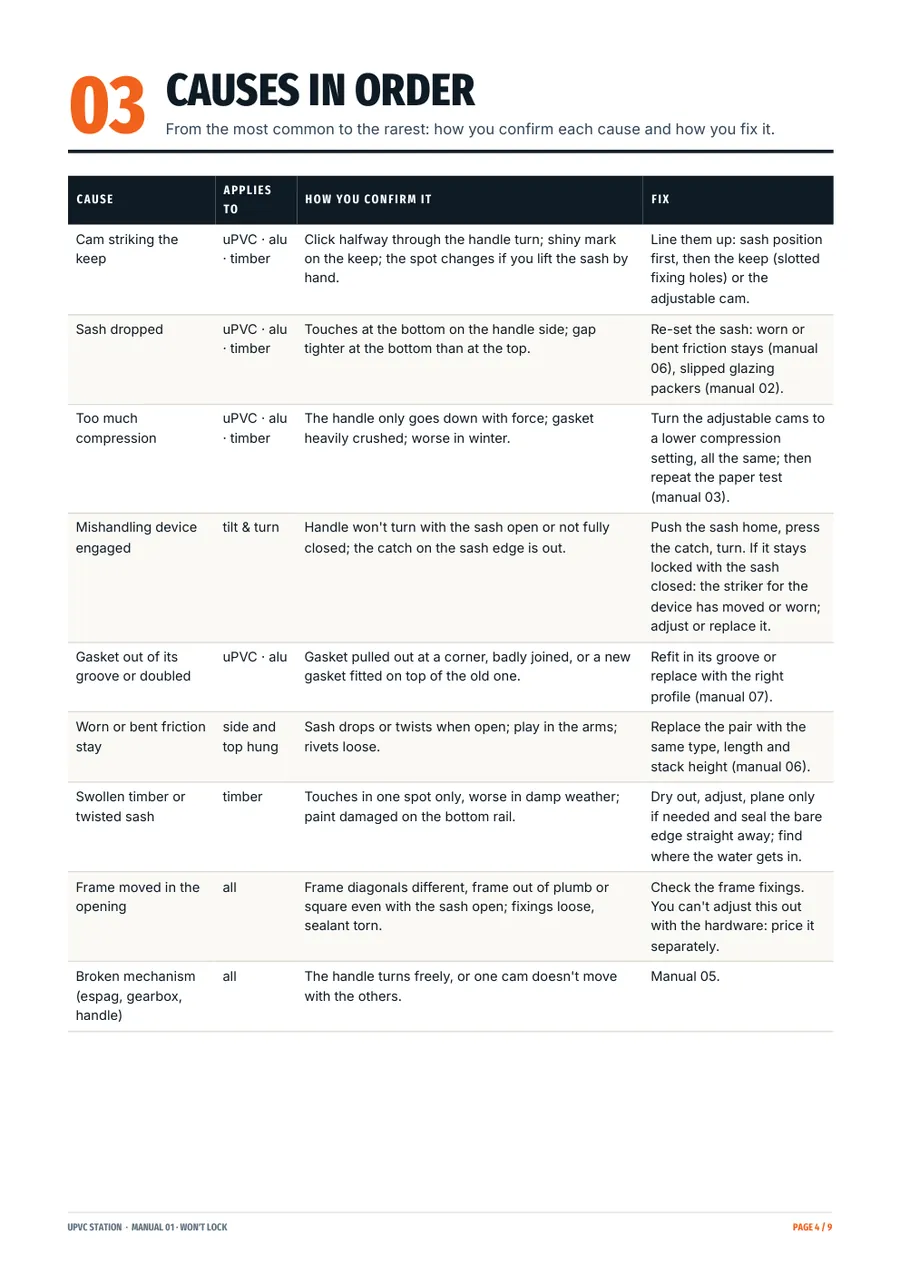
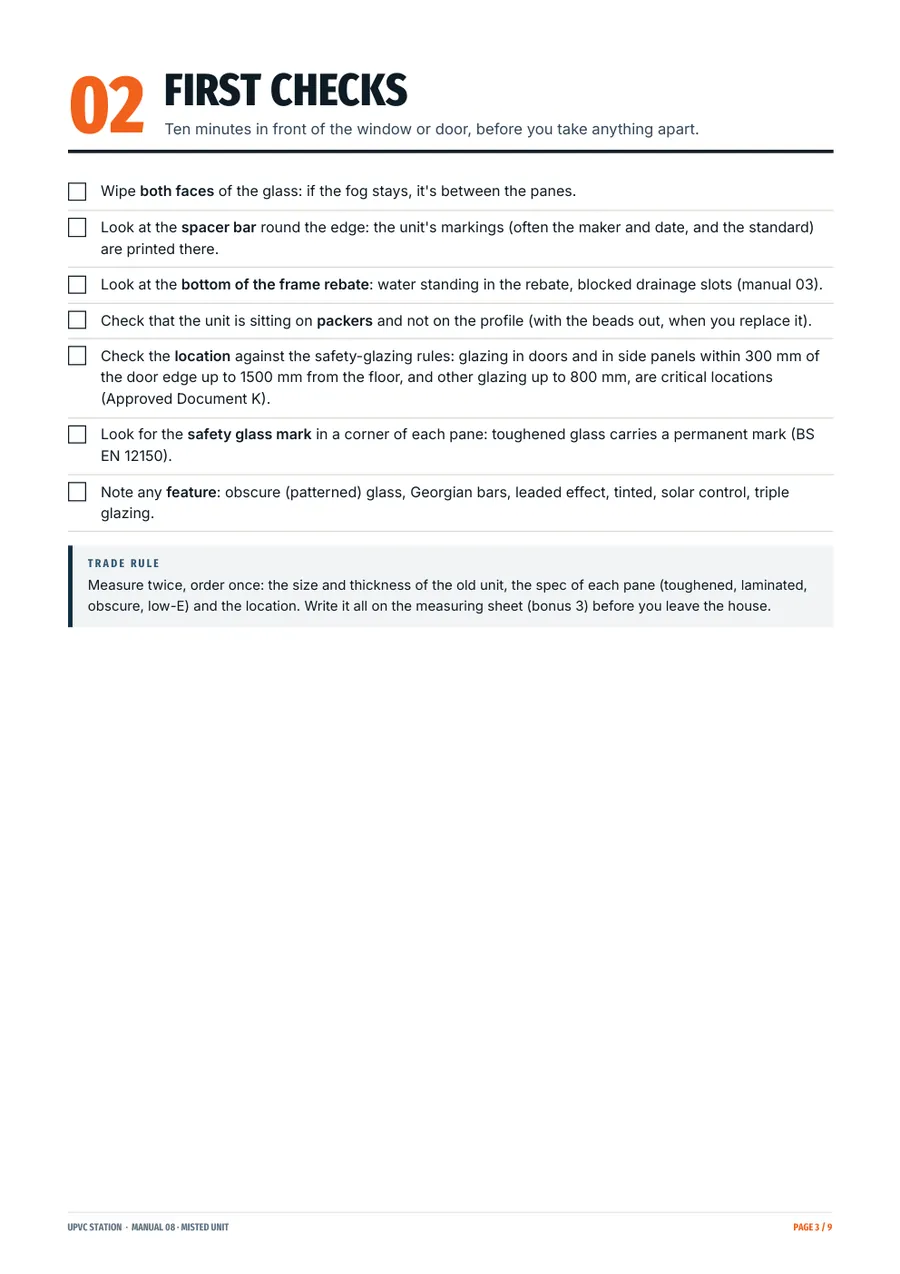
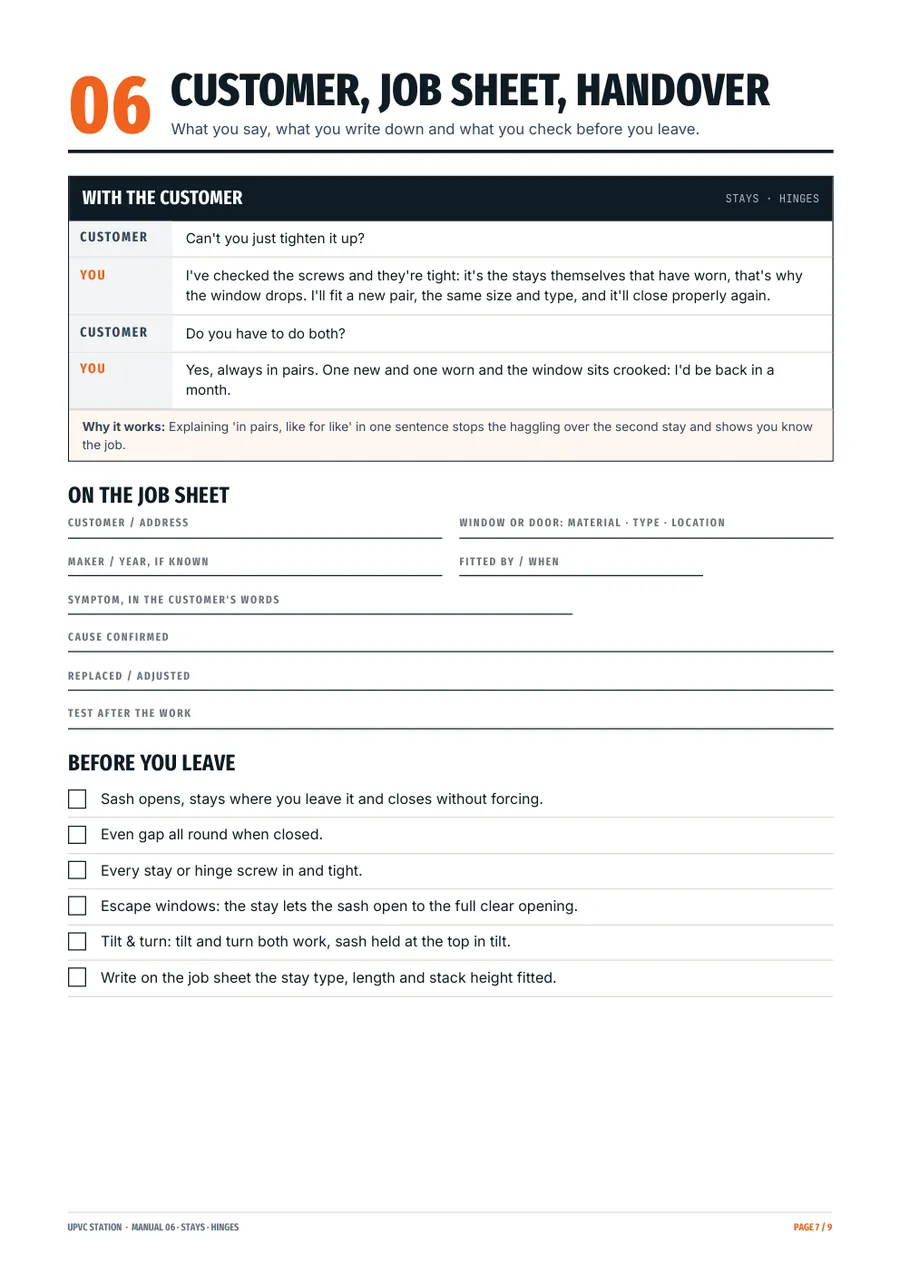
The manuals tell you what the fault is. The tools help you order the right part first time, adjust in the right order, measure a misted unit, quote on the doorstep and hand over without callbacks.
One manual per symptom, all with the same 7 chapters: the symptom and what it means, the first checks in front of the door or window, the causes in order (how you confirm and fix each one), the step-by-step diagnosis, what changes between uPVC, composite, aluminium and timber, what you say to the customer and check before you leave, and the sources. PDF files: shown printed in the photos.
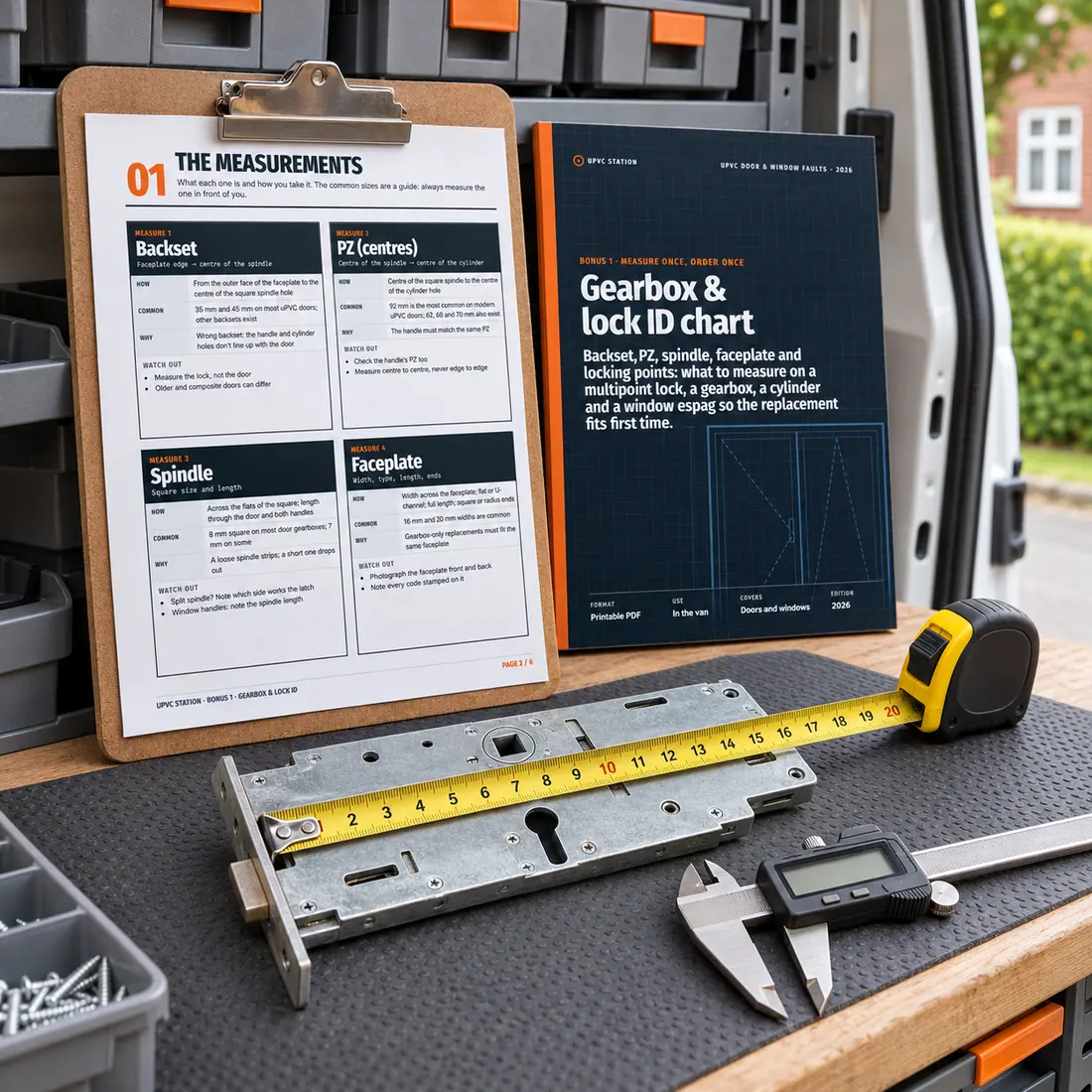
Backset, PZ, spindle, faceplate and locking points: what to measure on a multipoint lock, a gearbox, a cylinder and a window espag so the replacement fits first time. With a record table for every door you measure.
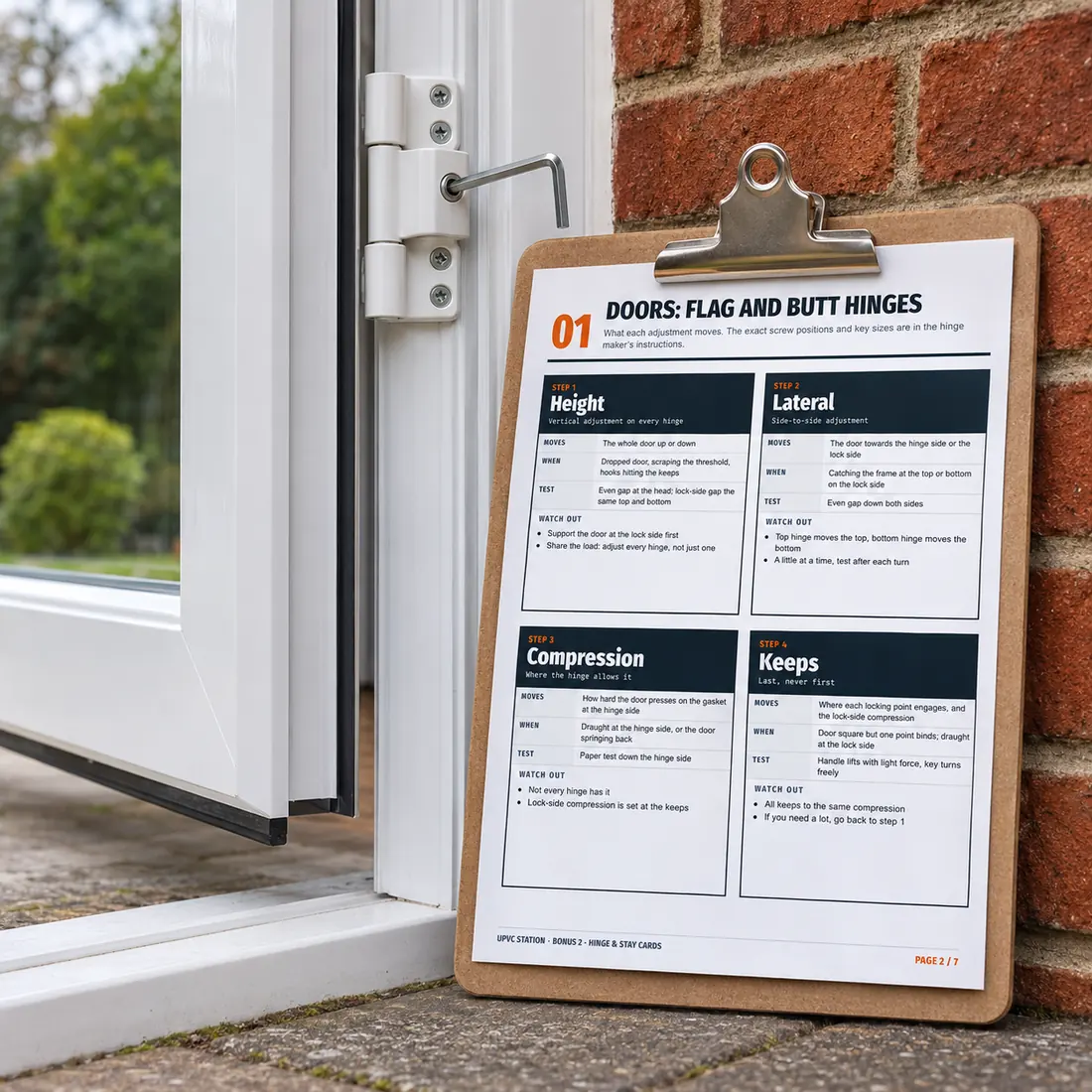
Flag hinges, butt hinges, friction stays and tilt & turn: what each adjustment moves and the order you touch them in. Plus the sheet for the systems you meet most.
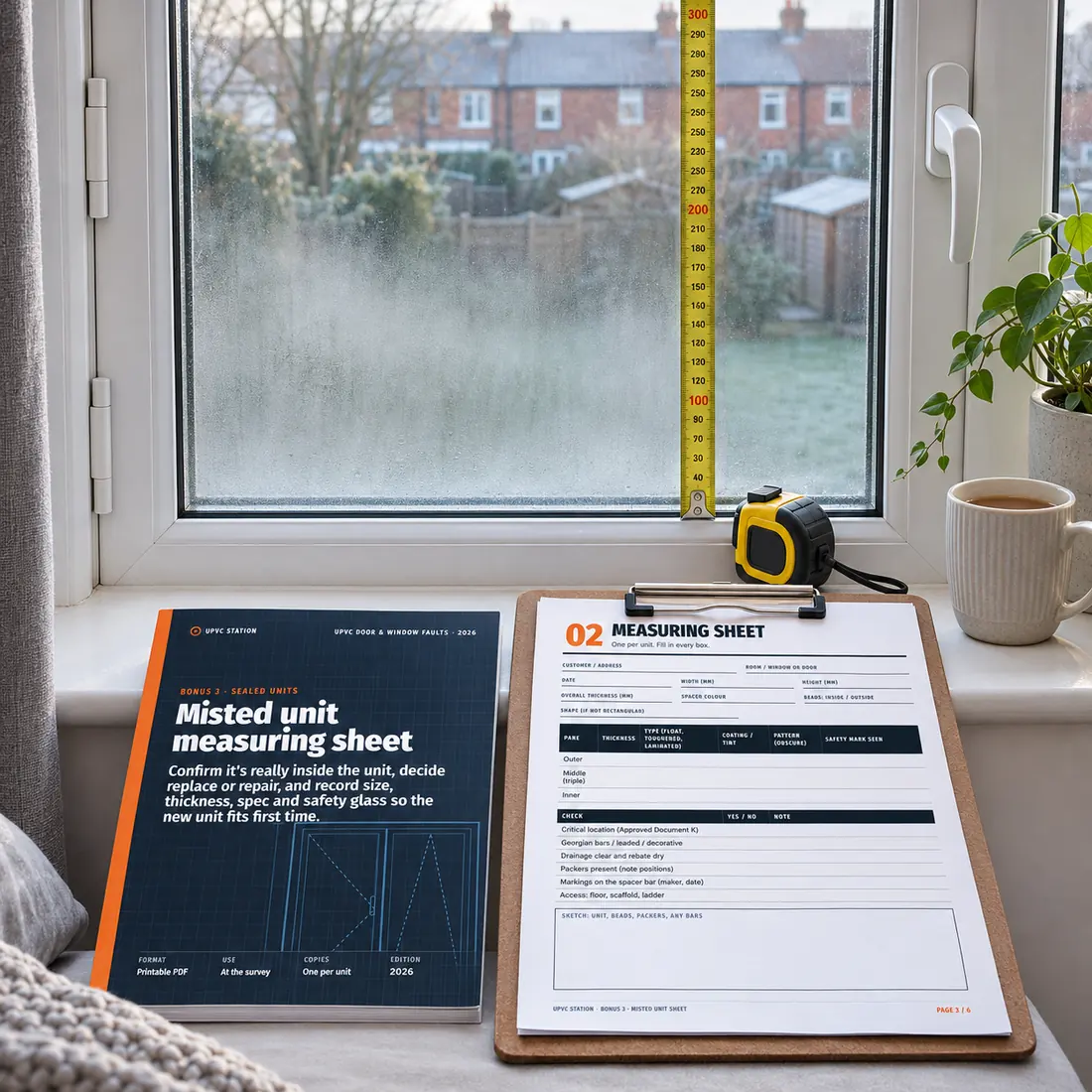
Confirm it's really inside the unit, then record size, thickness, glass spec and safety-glass location on one sheet, so the new unit fits on the first visit.
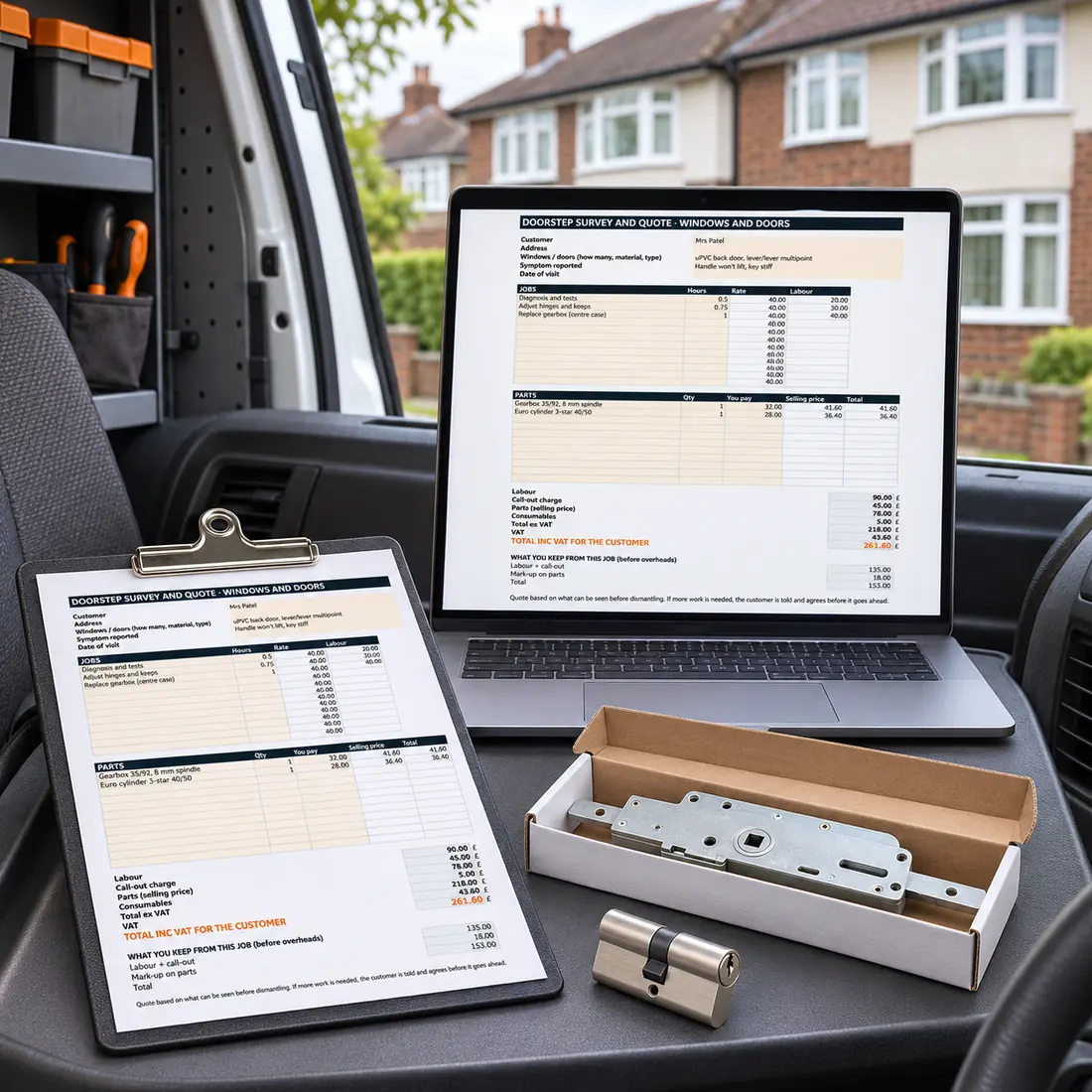
Type your rate, call-out and mark-up once and the sheet does the rest: labour, parts, VAT (20 % UK or 13.5 % Ireland, or none if you're not registered), the customer's total and what you keep.
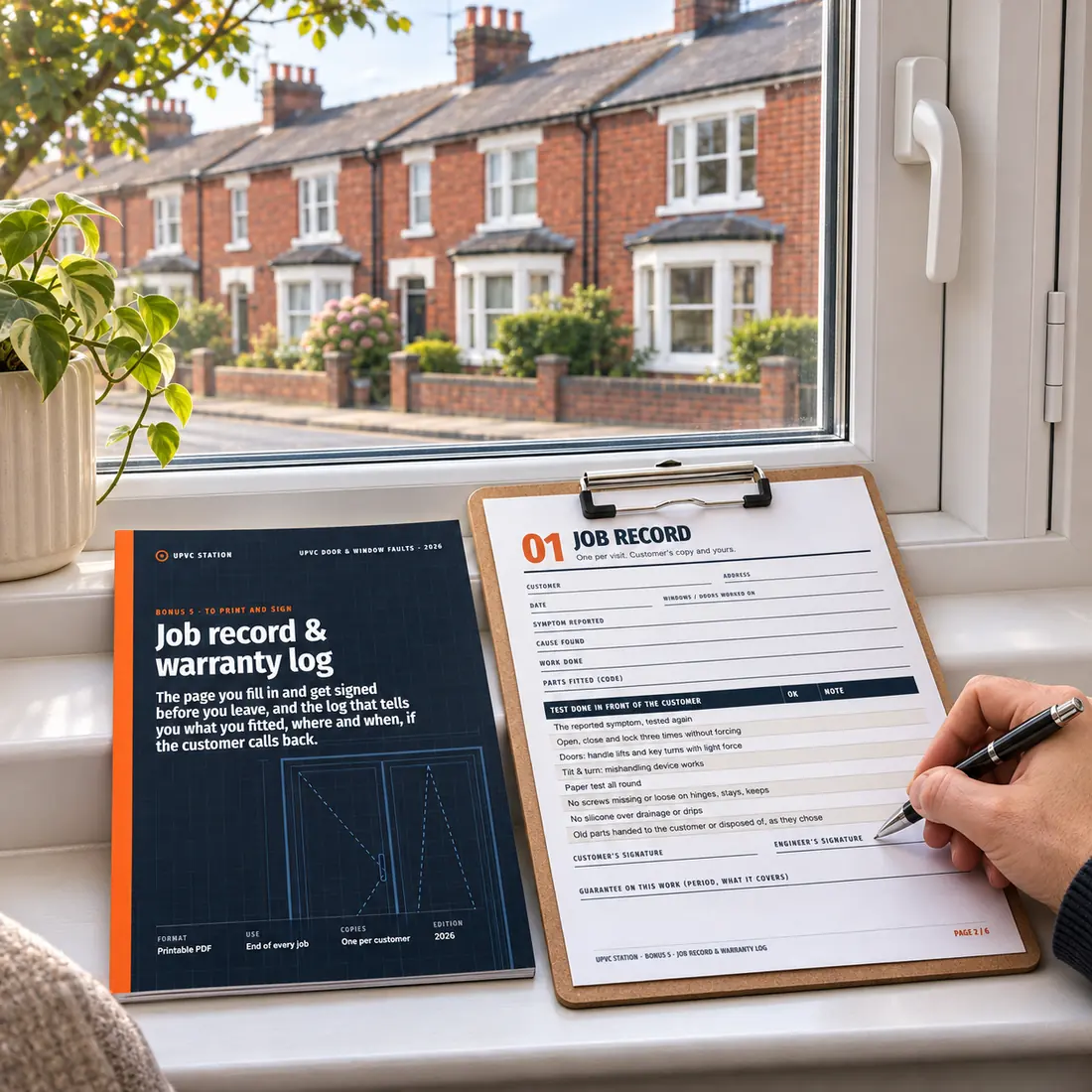
The tests you do in front of the customer, the page you both sign, and your log of what you fitted, where and when. What's written down isn't argued about.
'Won't lock', 'draught', 'misted': open that symptom's manual and the table 'what the customer says → where you look first' tells you where to start.
The first checks in front of the door or window and the step-by-step diagnosis, with what you do at every step if it passes and if it fails, down to the cause.
Hours, parts and VAT in Excel, and the words to explain it to the customer before you strip anything down.
The 'before you leave' list and the job record you sign with the customer.
A diagnosis method for every call-out, and something to hand a new starter before he goes out on his own.
Plenty of uPVC 'lock' call-outs aren't the lock at all: they're a dropped door. Here's how to prove it in a minute and fix it properly.
The calls after the install: adjustment, draughts, condensation, and a handover done so the customer doesn't ring back.
Lettings, housing, offices: lots of doors and windows, lots of symptoms. A manual for each and the order of the checks.
Better to know now than after you've bought it.
Download the pack and use it on your next call-out. You have 30 days from purchase: reply to your order email and we refund the full amount to the same payment method. No forms and no questions.
We use cookies from the Meta pixel and UTMify to see which advert you came from, only if you accept them. They are optional and the site works just the same if you reject them. More in our privacy & cookies policy.